Hand-rolled hash — sometimes called “finger hash” or “charas” — is one of the oldest and purest ways to collect and enjoy cannabis resin. Long before modern extraction methods or bubble bags, cultivators in regions like India, Nepal, and Afghanistan were already perfecting this hands-on art.
The technique hasn’t changed much in centuries: gently rubbing living cannabis flowers until the trichome resin gathers on your hands, then shaping it into dark, sticky balls or slabs. While it sounds simple, doing it properly takes patience, skill, and respect for the plant.
Here’s everything you need to know about how to hand roll hash correctly, from preparation to curing — and how to recognize premium hand-rubbed products like Temple Ball Om Hash or Lebanese Blonde Stamp Hash that follow this same craft tradition.

Hands covered in fresh cannabis resin during traditional hand-rolling hash process.
What Is Hand-Rolled Hash?
Hand-rolled hash is resin that’s physically collected from live or freshly harvested cannabis plants by rubbing the buds between your palms. The friction and warmth gently burst the trichomes, causing their sticky resin to cling to your skin. Over time, this builds up into a dark, oily film that can be scraped off and rolled into balls or slabs.
Unlike pressed or sieved hash — which relies on dry sifting or ice water separation — hand-rolled hash uses only human touch and temperature. This slow, organic process preserves much of the plant’s natural oils and terpenes, giving the final product a glossy sheen, flexible texture, and deep, earthy aroma.
Traditional examples include Nepalese Temple Ball Hash, Indian Charas, and hand-rubbed Afghani Black Hash, all of which remain highly valued for their purity and smoothness.
What You’ll Need
Hand-rolling hash doesn’t require fancy equipment, but conditions matter a lot. Here’s what’s essential before you start:
- Fresh cannabis plants – Ideally, harvested within the same day and still rich with resin. Strains with heavy trichome coverage like Gorilla Glue, Pink Kush, or Super Lemon Haze work especially well.
- Clean hands and arms – Wash thoroughly with unscented soap and dry completely. Even small traces of lotion or oil can contaminate the resin.
- Cool, shaded environment – Avoid direct sunlight or heat; warmth makes trichomes too runny and can degrade cannabinoids.
- Glass jar or parchment paper – For collecting and storing the finished resin.
- Patience – This is slow work; expect to spend at least an hour for a few grams of finished hash.
Step 1: Preparing the Plants
Start with fresh, resin-rich flowers. Hand-rolling works best when the buds are slightly tacky — not wet but not dry either. Ideally, the flowers should still have intact trichome heads that feel sticky when you touch them.
Some growers let the plants rest for a few hours after cutting to let moisture balance out before rubbing. This helps the resin cling better without being too watery.
If you’re practicing with dried flower instead of live plants, lightly mist the buds or store them overnight in a humid container to soften the trichomes before rolling.
Step 2: The Rubbing Technique
Hold a single cola (bud) between both hands and gently roll it back and forth — like you’re warming your palms. Don’t squeeze or crush; the goal is to apply consistent, gentle friction.
Within minutes, you’ll notice a light brown film beginning to appear on your skin. This is resin. Continue rubbing several buds until the film thickens into a visible layer.
Avoid rushing. Too much pressure breaks plant tissue, causing chlorophyll and debris to mix with the resin, which reduces quality. True artisan charas is made with slow, steady motion and minimal plant damage.
As you work, rotate through different buds to keep resin production even. In traditional regions like Himachal Pradesh, hash-makers often hand-rub for hours each day, producing only a few grams at a time.
Step 3: Collecting the Resin
Once your hands are coated in sticky, dark resin, gently rub your palms together in slow circles. The resin will start clumping and forming small rolls or balls.
Continue this motion until you’ve gathered all the resin into a single lump. It should look glossy black or dark brown on the outside, but when you pull it apart, the interior will appear golden or reddish.
That color contrast is a sign of quality — fresh hand-rolled hash has a soft, oily interior and burns smoothly when heated.
Step 4: Shaping and Curing
You can keep your hash as small spheres, press it flat into discs, or roll it into temple-style balls like Temple Ball Om Hash.
Once shaped, store it in an airtight glass jar or wrap it in parchment. Keep it in a cool, dark space for several weeks. This allows the hash to “cure,” meaning the resin’s oils redistribute and stabilize.
Proper curing deepens the aroma and smooths the smoke, turning a sticky resin into a balanced, flavorful product.
If you open a jar of aged hand-rolled hash, you’ll notice a sweet, musky aroma — that’s how you know it’s matured perfectly.
Step 5: Testing the Quality
The easiest way to test your hash is the melt test. Break off a small piece, place it on a metal dab tool or spoon, and apply low heat underneath.
- Full-melt hash bubbles gently and turns to liquid oil without leaving dark residue.
- Half-melt hash will soften and smoke but leave some char or ash.
You can also observe texture and aroma. High-grade hand-rolled hash feels soft and slightly oily, not dry or chalky. The smell should be earthy and rich — never grassy or chemical.
Products like Lebanese Blonde Stamp Hash or Mazar-E-Sharif Hash show these characteristics clearly: pliable, aromatic, and clean-burning.
The Science Behind Hand-Rolled Resin
The reason hand-rolled hash burns smoother comes down to trichome preservation. Each trichome head is a capsule of cannabinoids (like THC and CBD) suspended in terpene oils. When you rub gently, you’re collecting those intact capsules without the need for solvents or harsh friction.
Because no chemicals or high temperatures are involved, hand-rolled hash maintains more of its natural terpene profile. This is why varieties such as Flower of Beqaa Hash and Afghani Chatral Hash are known for their rich aroma and balanced high.
The process also slightly activates THC through mild friction heat, resulting in a relaxing yet clear-headed stone — often described as “meditative” or “spiritual.”
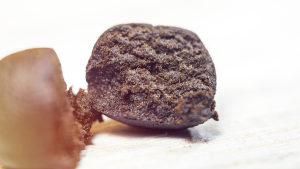
Freshly hand-rolled hash with a dark, resinous texture that melts smoothly when heated.
How Hand-Rolled Hash Differs from Pressed or Sifted Hash
Pressed or sifted hash is made by collecting dry trichomes (kief) and compressing them under heat or pressure. While it can achieve very high purity, the method lacks the natural oil content that gives hand-rolled hash its signature melt and aroma.
Here’s how they compare:
| Attribute | Hand-Rolled Hash | Dry-Sift/Pressed Hash |
|---|---|---|
| Texture | Sticky, oily, elastic | Dry, crumbly, compact |
| Aroma | Earthy, floral, sweet | Herbal, spicy, or neutral |
| Melt Quality | Soft, bubbling, smooth | Depends on filtration |
| Process | Manual (rubbing) | Mechanical (sifting or pressing) |
| Origin | India, Nepal, Afghanistan | Morocco, Lebanon, Canada |
Each type has its charm, but hand-rolled hash remains unmatched for tradition and sensory richness.
Storing Your Hand-Rolled Hash
Proper storage is crucial if you want your hash to stay fresh and pliable. Here’s how to keep it in top shape:
- Use airtight glass jars like CVaults or small mason jars.
- Keep away from light and heat — both cause cannabinoids to degrade.
- Store in a cool, dry environment, ideally between 10–20°C.
- If it dries out, wrap it in parchment and place it in a sealed jar with a humidity pack for 24 hours to restore softness.
Avoid plastic bags; they cause static and pull away trichomes. With proper care, hand-rolled hash can last for months without losing quality.
Safety and Legal Note
If you’re making hash at home, ensure you’re following local laws regarding cannabis cultivation and processing. In Canada, personal production is permitted within limits under the Cannabis Act, but rules vary by province. Always confirm before growing or processing plants.
Why Handmade Hash Still Matters
Even in an age of rosin presses and solvent extractions, hand-rolled hash remains an irreplaceable art. It’s sustainable, chemical-free, and deeply connected to the plant’s natural form.
When you smoke a piece of properly made Temple Ball Om Hash, you’re experiencing cannabis in one of its most authentic expressions — a tradition passed through generations of growers who value touch, patience, and purity above speed.
Final Thoughts
Learning how to hand roll hash isn’t just about technique — it’s about understanding the plant. Every step, from rubbing to curing, connects you directly to the resin itself. The process rewards calmness, care, and respect for detail.
Whether you’re experimenting with your own garden or enjoying handcrafted imports like Lebanese Blonde Stamp Hash or Mazar-E-Sharif Hash, the magic of hand-rolled hash is its simplicity — pure cannabis resin, no machines, no solvents, just skill and touch.
If you want to experience the real thing, visit The Natural Remedy’s Hash Collection for authentic, handcrafted imports and small-batch local creations.